
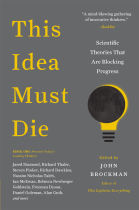
 A friend recently recommended reading the book “This Idea Must Die: Scientific theories that are blocking progress” which brings together 175 of the world’s most brilliant minds to tackle the question: What scientific idea has become a relic blocking human progress? I am yet to read the book instituted by Edge.org, but am captivated by the bold intent of the compilation as I’ve always believed that one of the most important signs of a living society, or for that matter, a group or a company or business is its ability to fairly-and-squarely question/asses even its most sacred “truths”.
Here are some ideas from this compilation that the maestros voted out:
- Steven Pinker dismantled the working theory of human behavior
- Richard Dawkins renounced essentialism
- Sherry Turkle reevaluated our expectations of artificial intelligence
- Geoffrey West challenged the concept of a “Theory of Everything”
- Andrei Linde suggested that our universe and its laws may not be as unique as we think
- Martin Rees explained why scientific understanding is a limitless goal
- Nina Jablonski argued to rid ourselves of the concept of race
- Alan Guth rethought the origins of the universe
- Hans Ulrich Obrist warned against glorifying unlimited economic growth
This year for its 20th anniversary special the question Edge.org is asking is “WHAT SCIENTIFIC TERM OR CONCEPT OUGHT TO BE MORE WIDELY KNOWN?” – can’t wait to read the compilation!
Related food for thought – which popular “idea” do you think must die in 2017?
P.S. Trump is not an idea. He is a human unfortunately! 😉


 Warren Buffett has a sixth sense for a person’s character (he’s closed deals in just five minutes with a handshake), so when he talks about his non-negotiables in potential hires, its wise to listen & heed:
 I was at an FT125 conference earlier this week where I had a fascinating discussion with the CEO of a medium-sized cosmetics brand company. I told him about my background in Communications and was surprised to hear that he too started his career in a somewhat similar role. “So how has the meaning of the word changed for you now?”, I asked him. “A lot”, he said, “what I value most in communication today is brevity. Today – whether it’s an email, a call, or a meeting – I insist that the writer/presenter tell me in the first sentence what he/she would have told me in the last sentence. That simple rule helps remind everyone what is the most important point of the conversation!”. Brilliant; reminded me of Donald Coduto’s famous MPT rule, “The most important thing (MPT) is to keep the most important thing the most important thing” … Would you agree?
 must read for everyone:
 Inspiration Bar by Zulfia